
Materials and Manufacturing for Ship Models: The Path to Authentic Appearance
Materials and Manufacturing for Ship Models: The Path to Authentic Appearance
At HiSModel, we carefully select materials and optimize manufacturing processes so that our accessories allow you to achieve maximum authenticity and a professional museum-quality appearance for your model. Our products are designed with both historical accuracy and practical model-building considerations in mind. For inspiration, you can explore our Photo Gallery of completed models.
High-Quality Walnut Wood and Precision CNC Manufacturing
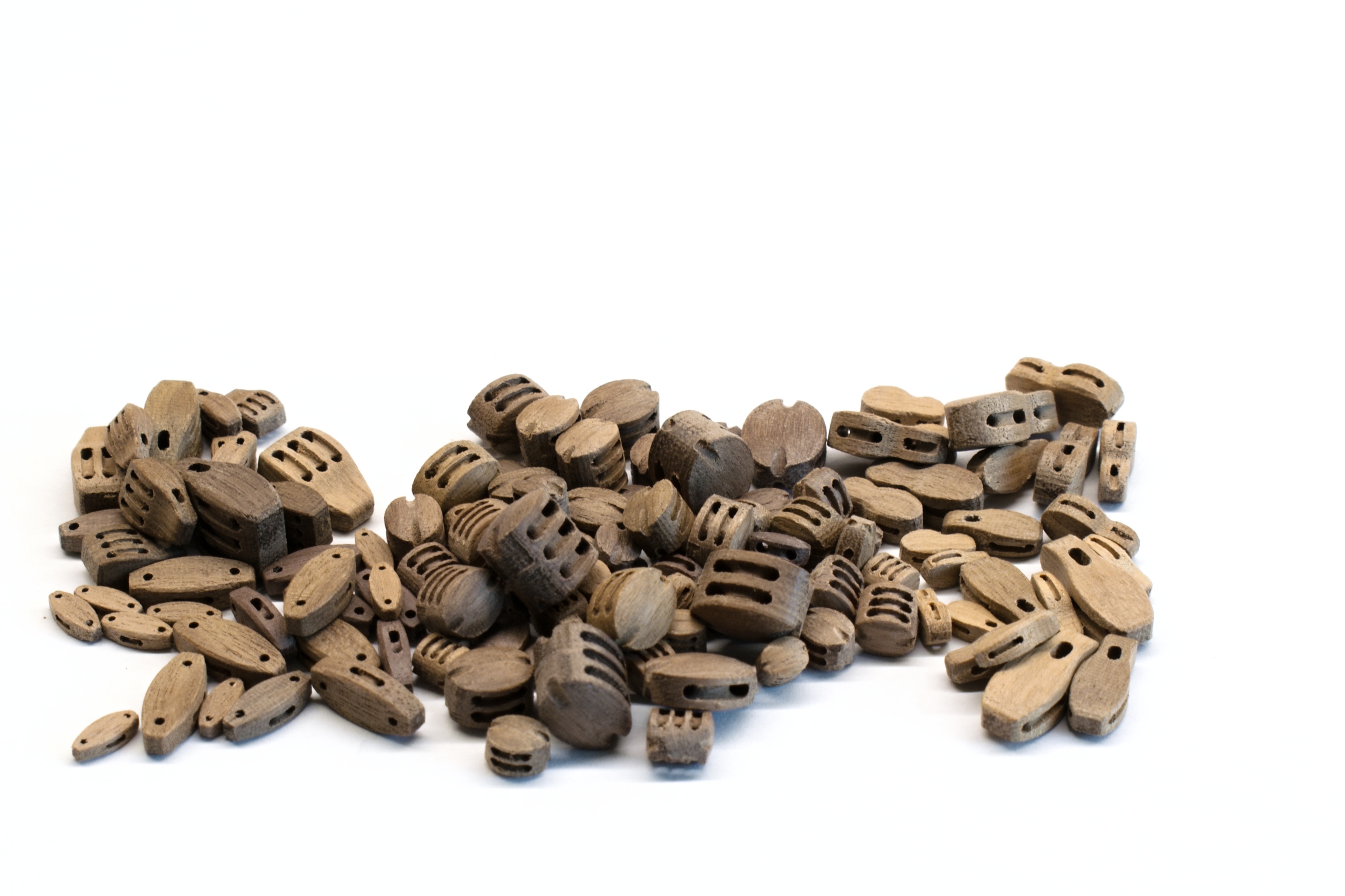
The foundation of our rigging components—blocks, belaying pins, and other wooden elements—is carefully selected walnut wood.
- High precision: Thanks to advanced CNC manufacturing, we are able to produce highly detailed parts even in extremely small sizes (e.g., blocks from 2 mm), while maintaining their strength.
- Material properties: Walnut wood is dimensionally stable, resistant to splitting under rigging tension, and its natural color gives rigging elements an authentic appearance without the need for additional painting.
- Expert guidance: To help you choose the correct type and size of rigging components, see our Guide to selecting the right blocks, which also includes access to a practical rigging calculator.
Veneer Decks on a Reinforced Base
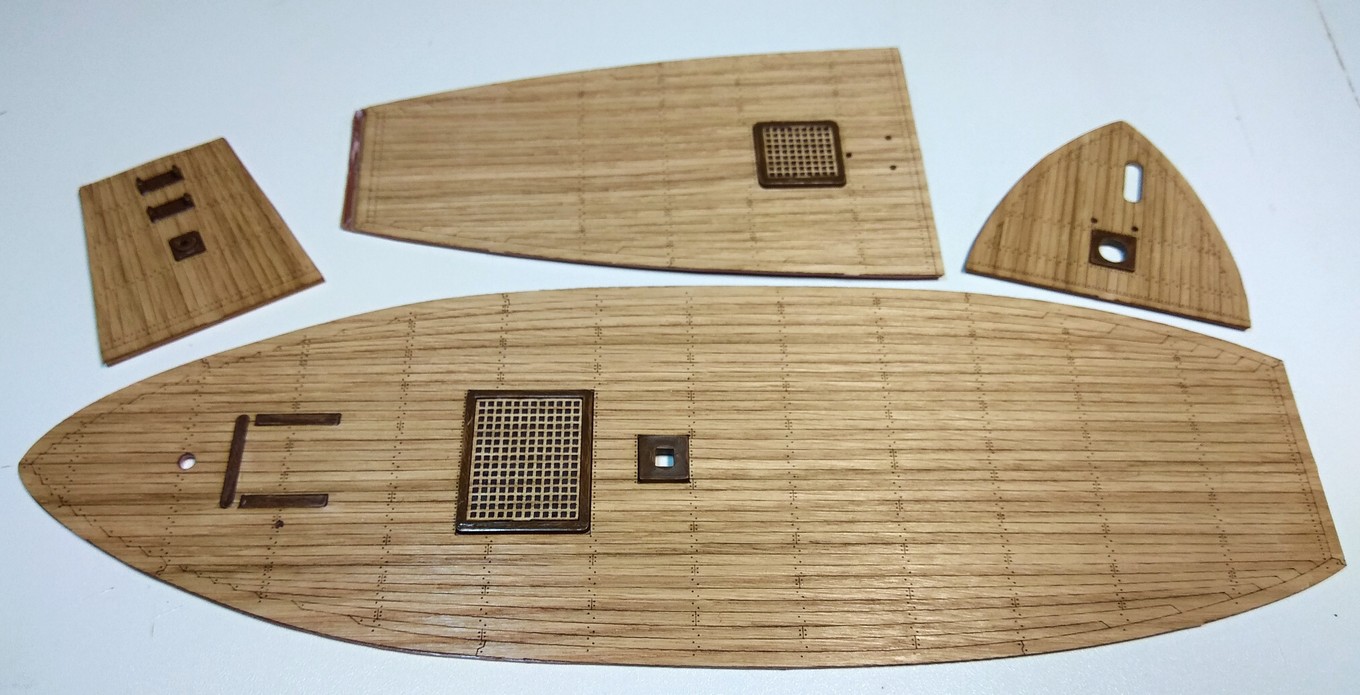
Our decks use a layered construction that combines the visual appeal of wood with mechanical durability:
- Historical geometry: Decks are designed to accurately reflect construction practices of the period. This includes the waterway plank, hooked plank ends at the bow, and progressive plank tapering. Treenails are also marked, showing how the deck was fastened to the beams, with positions corresponding exactly to the ship’s structure.
- Durability and flexibility: The veneer is bonded to a special felt backing, providing flexibility and preventing cracking during handling.
- Ideal thickness for plastic kits: Sanded and polished to a final thickness of 0.3 mm, the deck does not significantly alter height once applied. For kit manufacturers such as Revell, Heller, Airfix, etc., this ensures a perfect fit into the hull while maintaining correct proportions of all other details.
- Reliable bonding: The dispersive surface of the felt backing ensures excellent adhesion to both plastic and wooden surfaces. A detailed installation guide can be found in our Veneer Deck Application Guide.
Cloth Sails: From History to Precision Craftsmanship
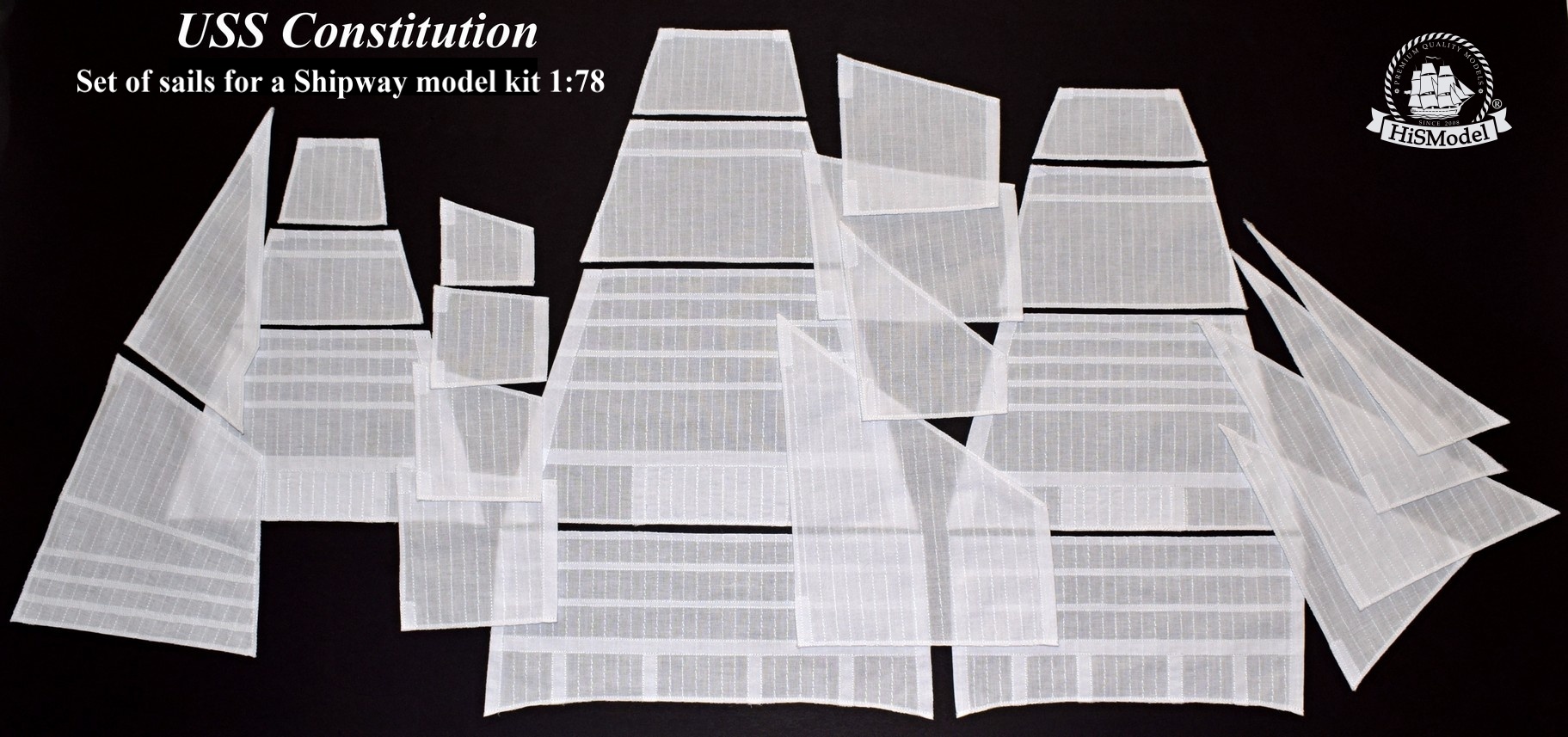
Sail production combines technological precision with careful attention to historical practices of different navies.
- Combined manufacturing: We use CNC embroidery to create base shapes and lines with absolute cutting precision. All edging and final finishing are done by hand, ensuring high-quality craftsmanship and an authentic appearance.
- Material and color: We use pre-washed 100% cotton fabric (125 g/m²). Depending on the vessel, we work with either white or beige cloth (for example, newer ships such as USS Constitution had lighter sails).
- Structural details: Sails include reef bands, reinforced edges, corners, and other elements. All these details are carefully reproduced based on original plans or historical naval practices. We rely on period authorities such as David Steel (The Elements and Practice of Rigging and Seamanship) and Jean Boudriot (The Seventy-Four Gun Ship).
- Furled sail sets: We offer sets specifically adjusted for realistic furled appearance on yards, preventing unnatural bulk. These sails also include visible details even when furled. Standard and furled sail sets can be combined.
- Studding sails: These sails are included as standard for selected models. Upon request, we can also produce them for other models and scales, provided suitable reference materials and dimensions are supplied.
- Heraldry and decorative sails: Since sail decoration with heraldic symbols was common for ships up to the late 16th century, we offer colored sail variants for such models. These are based either on historical sources or customer specifications.
- Practice: Complete instructions for sail preparation and installation can be found in our Cloth Sail Guide.
Cannons and Carriages: Technical Precision and Easy Assembly
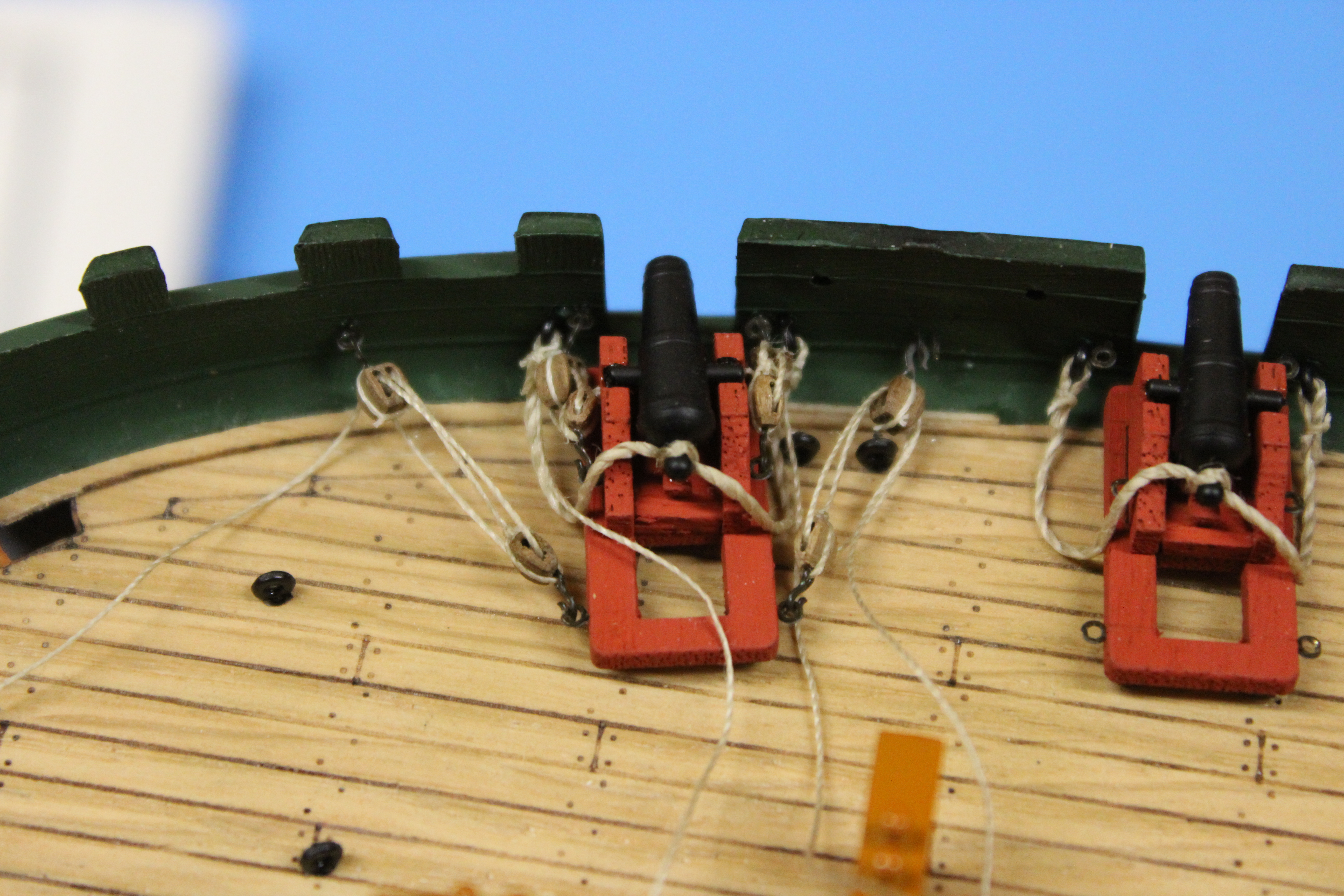
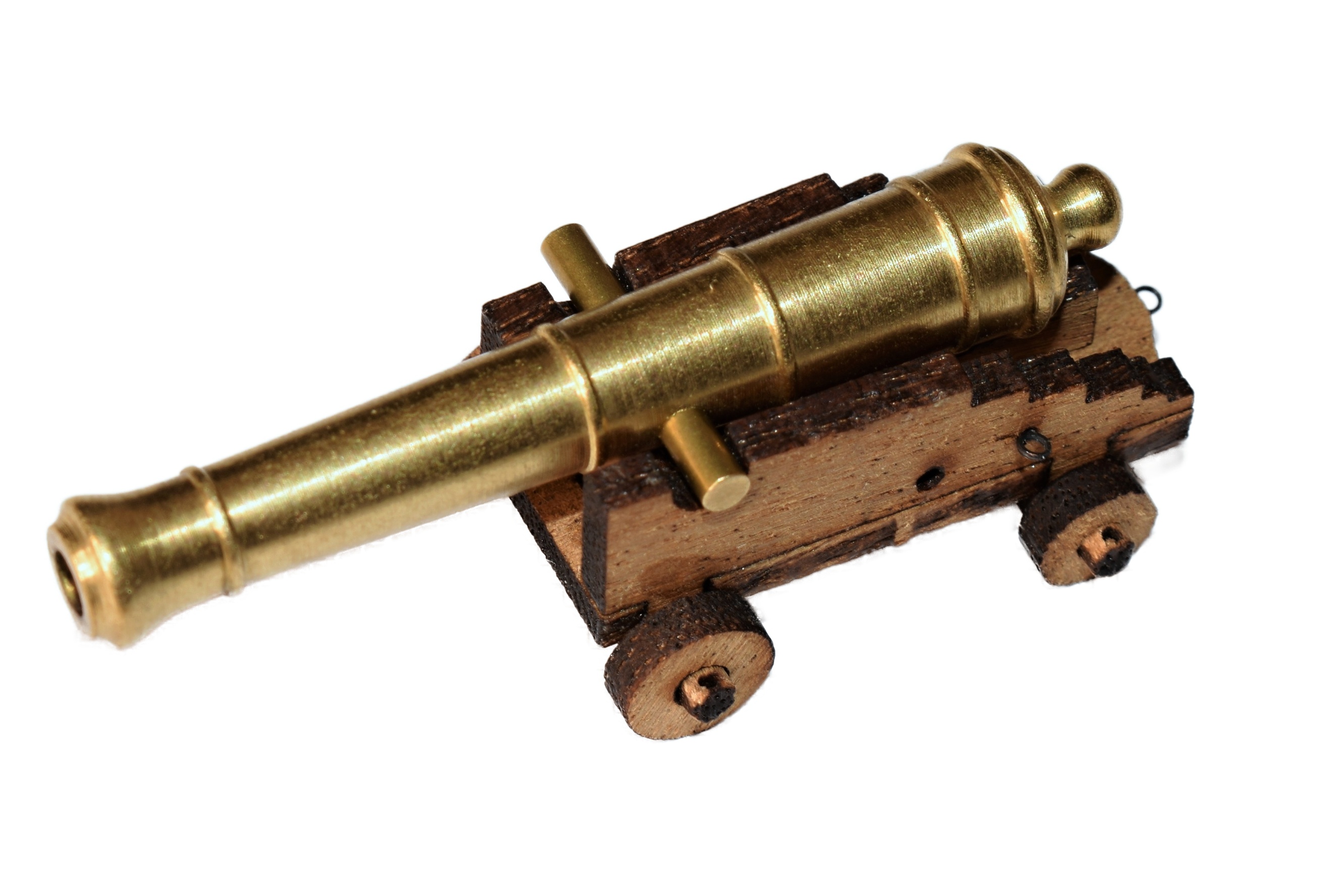
- Turned brass: Cannon barrels are manufactured by precision turning from solid brass, ensuring perfect geometry and sharp detail. The surface is ideal for patination, which we recommend for achieving a realistic finish.
- Wooden carriages: Made from solid walnut wood, designed for easy assembly and reliable bonding directly to the deck.
- Assembly: Instructions for painting and assembling the carriages can be found in our Wooden Carriage Guide.
Flags and Photo-Etched Parts
- Flags: Our flags are printed on both sides in high resolution on a very fine synthetic fabric, allowing easy shaping (e.g., a natural waving effect). To learn how to achieve this effect, see our Flag Shaping Guide.
- Photo-etched parts: Functional elements (eyelets, chains) are made from brass and supplied pre-blackened to simulate oxidized iron. Decorative inscriptions are left in polished brass finish. Learn how to apply these elements in our Photo-Etched Ornament Guide.
The use of these authentic materials ensures that your model achieves the character of a real historical vessel and a professional appearance. You can also review our Shipping Standards to see how we deliver these components safely to you. If you are looking for more technical guidance, explore our Ship Plans or browse the complete list of our Modeling Guides and Instructions.